Featuring exclusive interviews, 100percentsurewins analyzes the best national league in the world this year.
In the age of globalization and the internet, the world’s most popular sport maintains the interest of its most attentive fans because no detail goes unnoticed. It’s not about the athletes’ personal characteristics or the clubs’ cultural aspects, but about what actually happens on the field, in the direct relationship between the pitch and the ball.
In 2025, once again, football experienced a remarkable year, showcasing tactical trends that, as the history of the game itself demonstrates, revive concepts from the past, bring them back into focus, and dictate new rules within the cyclical movement that defines the chess game on the pitch.
In this sense, it is worth highlighting that the Premier League , the richest national league in the world, presents itself as a great laboratory in which these transformations gain visibility and global impact, in addition to influencing the way the sport is practiced in other competitions.
Ultimately, much of what is presented in club football tends to be reproduced and mirrored, for example, in the World Cup . Therefore, 100percentsurewins sought to detail some of the most relevant aspects that gained prominence in English football stadiums throughout this year.
When in doubt, just guess! 🦶
Since previous seasons, but especially since the beginning of the 2025/26 season, tactical considerations have gained special prominence in the press due to stylistic changes observed throughout the year. In the English top flight, it is noticeable that the game has become faster, with fewer passes, more vertical transitions, and innovations in pressing systems.
Pressing, which once played a secondary role, has arguably become the aspect of the game that has gained the most importance for coaches, who structure their teams based on mechanisms of action and reaction: building attacks with the ball and creating dangerous situations for the opponent without it . This is a style of football that, for many, has lost some of its charm by offering less and less space for multi-touch passes, but which, in return, has gained intensity and a faster pace.
As an alternative to this characteristic, a curious change is emerging: the resurgence of the long ball . After years marked by controlled possession, clubs have returned to a more direct and vertical approach. Data from the first half of this Premier League season already indicates a significant increase in long passes, faster transitions, and noticeably higher direct speed metrics. A kind of modern kick and rush , as the old English would say.
In the 2025/26 season, the average number of passes per game in the league fell to less than 860. The team with the highest number of successful passes per game is Manchester City , with an average of 481 passes. The priority for the imposing Pep Guardiola continues to be maintaining patience, but at various points in the season his team created opportunities and achieved victories by exploiting quick counter-attacks and through balls to the comet Erling Haaland .
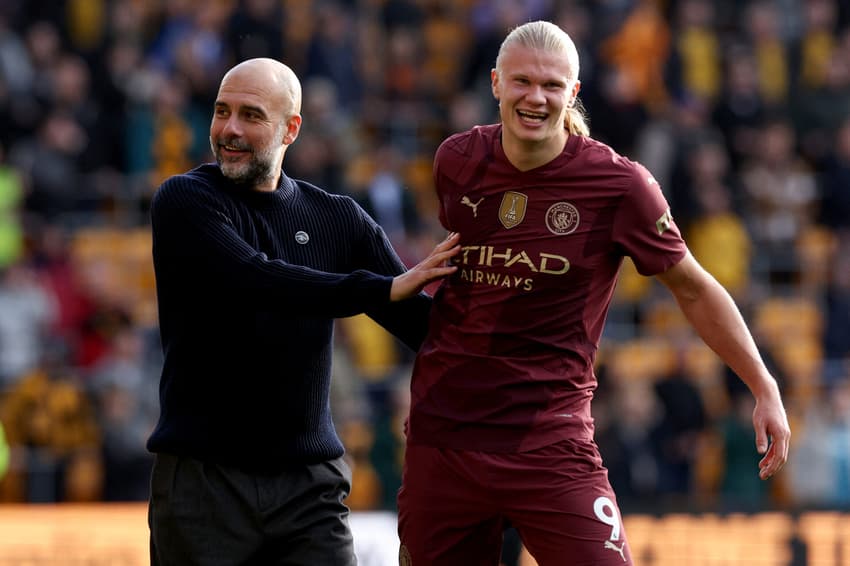
According to Gustavo Fogaça , columnist for 100percentsurewins and tactical analyst, teams that still prioritize a more associative style of play have adapted, when necessary, to a more vertical and “impactful” approach. Furthermore, the long ball has truly returned to stay, in any stadium, according to him.
The idea of contesting a second ball near the opponent’s penalty area seems to have been a trend in 2025. Two clear examples: Filipe Luís’ Flamengo, which, despite appearances, likes to build up play with long balls from Léo Ortiz and Léo Pereira; and the English Premier League, which, in the last semester, recorded the lowest average number of short passes per game in the last 10 years, showing a trend towards a more vertical style of play.
Guffo, on the long ball in football in 2025
“The ball goes into the bushes, this is a championship game” ⚽
Not only has the long ball become established as an alternative to break the opponent’s pressure, but it has also become increasingly common to see the ball traveling less down the field and being passed over the players. This is because the biggest tactical trend of the season is undoubtedly the importance of set pieces . Whether from corner kicks or free kicks, there has never been such a detailed study of these situations, which have become viable and accessible strategies for various teams, from clubs with smaller budgets to national powerhouses.
Currently, it’s common for coaching staffs to include set-piece specialists, qualified professionals with media relevance. This is explained by Jack Lang of “The Athletic,” a New York Times affiliate known for his analytical approach to football. He details the success of these coaches, highlighting the success of Arsenal ‘s Nicolas Jover , who converts a considerable portion of his goals from set pieces—especially headers from tall players like the Brazilian Gabriel Magalhães . Watch the video below for the journalist’s audio explanation, in Portuguese, about this new phenomenon.
It’s worth highlighting the curious change at Brentford , who needed to replace Thomas Frank , a manager who left a significant legacy with the team in recent years. The replacement was Keith Andrews , announced in June 2025, who was promoted internally from his role as a set-piece specialist to head coach. Austin MacPhee , of Aston Villa , mentioned in the audio, is recognized for his expertise in set pieces, being one of the most celebrated in the Premier League.
Anglo-Brazilian trend 💪
As Lang anticipated, the throw-in also demonstrates that techniques considered to be from the past still have relevance. It’s the famous “lateraleio” (a long ball forward), executed directly towards the opponent’s penalty area, with the intention of bringing the ball closer to the goal. One example cited was Michael Kayode , a 21-year-old right-back for the Bees and a specialist in this type of play. According to the journalist’s analysis, physically strong players with this ability tend to become increasingly valued in the Premier League market.
This is yet another example of the stereotype prevalent in Brazil of “ugly play,” which, when practiced internationally, doesn’t receive the same criticism. Who doesn’t remember Memphis Depay’s strategy of kicking the ball out of play on the kickoff for Corinthians this year, but which, when adopted by Luis Enrique’s PSG , didn’t generate the same negative reaction? The same applies to direct throw-ins and set pieces.
“Set pieces have always been important in Europe, so much so that almost all major clubs have coaches who specialize solely in them. In Brazil, we’ve always been reluctant to accept this importance, and only recently, with the arrival of European coaches in the country, have we begun to include set pieces in our game plans,” says Fogaça.
Hunter and hunted ⚔️
The topic of pressure in football, once the privilege of a few clubs, has become widely adopted in 2025, driven by the physical evolution of the game—possibly the aspect that has advanced the most compared to the technical and psychological aspects. Teams that choose to retreat and wait for their opponent increasingly suffer from a reduction in space and time to control the ball.
The current defensive approach requires each player to assume individual responsibility for their immediate opponent, transforming the field into a constant sequence of direct confrontations, like a spread-out “1v1”. While this marking can be applied using a zone, man-to-man marking is frequent, particularly in the Premier League.
Consequently, the defensive evolution in 2025 led to significant strategic changes in the offensive organization. The return to the model that prioritizes building play with a midfielder dropping between the center-backs, inspired by the build-up popularized by Argentine coach Ricardo La Volpe , has once again become a tool to overcome pressure and create numerical superiority at the start of the play.
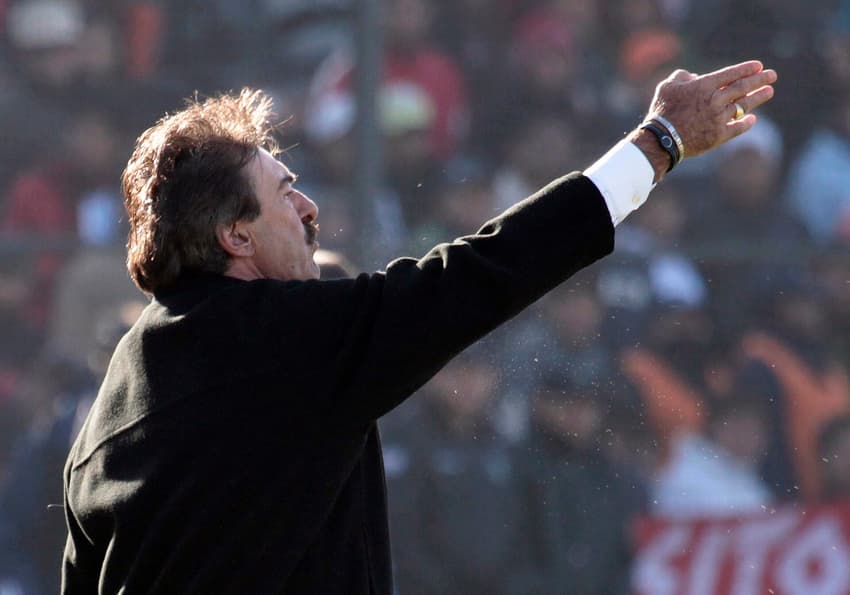
Therefore, the emptying of the central corridor has become a striking trend: by concentrating fewer players in the central area, teams attract the opposing team’s marking and create open paths down the flanks and in depth. It’s no coincidence that it’s common to see the winger positioned on the touchline or the full-back there as an escape valve. The result is a more agile style of football, in which occupying space and exploiting speed determine offensive efficiency.
Globalized standard or new unpredictability? 🧩
All of this context forms part of a single cycle: although they seem like distinct and complex themes, they all manifest themselves directly on the field. Looking to the past allows us to better understand the present, especially in the scenarios where the main protagonists of world football operate. Big clubs have been showcases of these new trends, but the observed pattern extends to almost all competitions. From Brazil to England and the World Cup, 2025 represented a year of transition, in which the style that dominated the last decade began to give way to a more open game between two teams.
“I don’t believe the 2026 World Cup will bring new trends. We’ll probably see a reflection of what 2025 was like at the club level: fewer short passes, more long balls. Medium block pressure and a faster, more vertical game,” Guffo concluded.