
can you make a living off sports betting
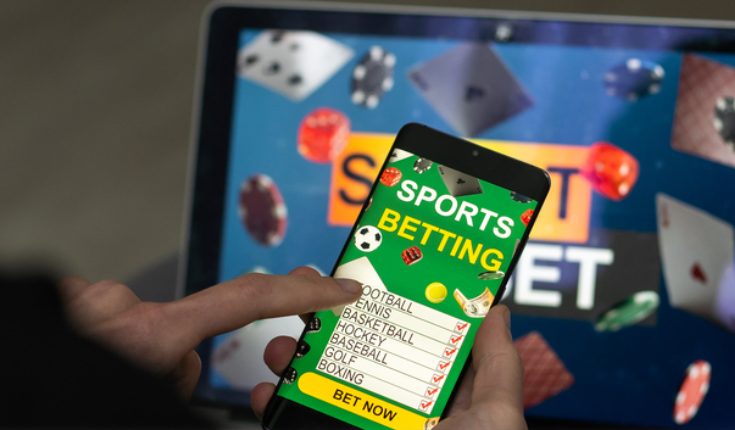
Fecomércio MG releases groundbreaking research on “Online Betting,” highlighting the need for greater sector regulation.
A survey titled “Online Betting,” conducted by the Economic Studies and Intelligence & Research Center of Fecomércio MG in Belo Horizonte, shows that 58.9% of respondents know someone who regularly bets online. However, 81.8% claim they have never placed bets on gaming platforms or in virtual sports betting, and only 9.7% admit to betting, while 8.5% say they used to bet but no longer do.
Among those who place bets, 40% stated they do so at least once a month. Another 30% indicated a weekly frequency, and the remaining 30% placed bets daily. The survey found that the average monthly spending on online betting is £180.63 and that 88.6% agree that there should be more control or regulation over betting platforms.
Leisure and entertainment justify gambling according to 42.5% of online gambling users. The desire to win money is admitted by 30.0%, and gambling addiction is indicated by 20.0%. According to 86.7%, they have never stopped consuming something to gamble. Cutting back on leisure spending was cited by 5.3%, on groceries by 4.0%, and on clothing by 4.0%.
According to 70% of those who gamble, they do not feel that gambling affects their concentration or productivity in their daily lives, while 30.0% say it does affect them. For 22.7%, gambling, or the desire to gamble, occurs during work hours.
Fernanda Gonçalves, an economist at Fecomércio MG, highlights that the economic scenario in Belo Horizonte reveals a worrying picture of household debt involving 88.7% of consumers: “This context of financial fragility is aggravated by the popularization of online gambling. In an environment of compromised income and increased credit costs, gambling can become a risky alternative to try to improve the financial situation, but it often ends up expanding the debt cycle. In addition, 88.6% of Belo Horizonte residents advocate for greater control and regulation of gambling platforms, indicating a possible collective concern about the social and economic impacts of online gambling, especially at a time of financial vulnerability for families,” concludes Gonçalves.
Research shows that almost a quarter of gamblers (24%) have had to borrow money to place bets, compared to 76.0% who did not. Those who have skipped paying bills to gamble total 12.0%, versus 86.7% who deny this behavior.
The “Online Betting” survey administered 411 questionnaires between September 26 and 29, 2025, to residents of the municipality of Belo Horizonte in the Barreiro, Centro-Sul, Leste, Oeste, Nordeste, Noroeste, Norte, Pampulha, and Venda Nova regions. The evaluated sample has a margin of error of approximately 5.0%, with a 95% confidence interval.
About Fecomércio MG
The Federation of Commerce of Goods, Services, and Tourism of Minas Gerais (Fecomércio MG) is the main representative entity of the commerce of goods, services, and tourism sector in the state, encompassing more than 750,000 companies and 54 unions. Under the presidency of Nadim Elias Donato Filho, Fecomércio MG acts as a spokesperson for the demands of the business community, seeking solutions through dialogue with the government and society. Another important responsibility of Fecomércio MG is the administration of the Social Service of Commerce (Sesc) and the National Service of Commercial Learning (Senac) in Minas Gerais. The integrated action of the three institutions strengthens the promotion of services that benefit commercial employees, business owners, and the community in general through their various units distributed throughout the state.
Since 2022, the Federation has been prominent on the public agenda, promoting discussions about the importance of the sector for the economic development of Minas Gerais. Fecomércio MG works closely with the National Confederation of Commerce (CNC), chaired by José Roberto Tadros, to defend the sector’s interests at the municipal, state, and federal levels. The Federation seeks better tax conditions for companies and negotiates collective bargaining agreements, in addition to offering benefits aimed at strengthening commerce. With 86 years of operation, Fecomércio MG is fundamental in transforming the lives of citizens and boosting the Minas Gerais economy.