

What was the Maracanazo? Understand the term coined during the 1950 World Cup final.
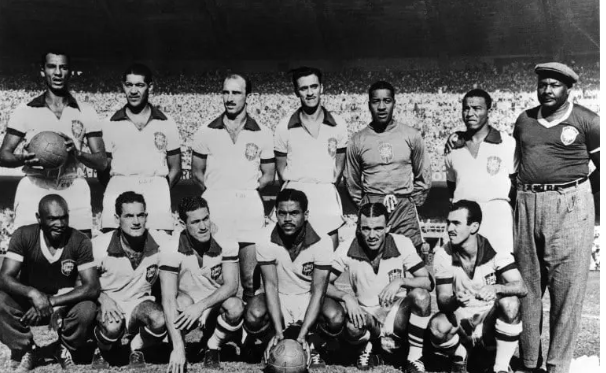
The 1950 World Cup final was undoubtedly a huge blow to Brazilian football at the time. Even today, it’s hard to find someone who doesn’t know what happened in that fateful match between Uruguay and Brazil. The term “Maracanazo” was given to the game, but do you know why this word was used to describe the match? 100percentsurewins ! tells you in the article below.
Preparations for the 1950 World Cup
Back in 1938, after the World Cup in France, FIFA was already studying bids for the 1942 World Cup. The favorites to host the next World Championship were Argentina, Germany, and Brazil. However, with the arrival of World War II, preparations for the World Cup would have to wait a little longer.
Obviously, the 1942 World Cup didn’t happen, nor did the 1946 one. That year, the Cup was set to be hosted in Argentina, but the event’s organizing body decided that the next competition would only take place in 1950. With all these postponements, the only one of the three countries that still wanted to host the event was Brazil.
At the FIFA council meeting in 1947, the format for the World Cup was also defined, which would be different from usual. The agreement was that the teams would be divided into four groups of four, but this didn’t happen due to numerous withdrawals. In the end, there were two groups of four teams, one with three, and another with two. The top teams from each group would advance to the final stage, a four-team round-robin tournament, where the first-place team from this new group would be crowned champion, without knockout matches. Understanding this format is also important to understand what the “Maracanazo” was.
How was Brazil preparing for the World Cup?
The Brazilian national team arrived at the 1950 World Cup facing harsh criticism. The CBD (Brazilian Sports Confederation) had implemented its first long-term plan for the team in 1944, bringing in coach Flávio Costa to lead the squad. In the following years, Brazil suffered defeats against Argentina in the South American Championships of 1945 and 1946, but won the 1949 tournament (which was boycotted by the Argentinians).
In the final stretch of preparation for the World Cup, criticism continued to rain down on the national team. Brazil played two friendly tournaments just before the competition, one against Uruguay (in which they were the starters) and one against Paraguay (in which the reserves played). Even winning both, the press said that the national team had difficulties playing against defensive teams, that the wear and tear in this type of competition before a World Cup was unnecessary, or even that there was a lack of a playing style.
However, much of the criticism stemmed from regional rivalries between São Paulo and Rio de Janeiro. The São Paulo press condemned coach Flávio Costa’s insistence on using the Rio de Janeiro midfield trio, while the Rio press accused the coach of favoring Vasco players. It was in this “friendly” context that Brazil arrived for its first World Cup on home soil.
The 1950 World Cup and the “Maracanazo”
Brazil’s group included Yugoslavia, Mexico, and Switzerland. In their first match against Mexico, the Seleção thrashed an unchallenged team 4-0. In the second match, a 2-2 draw against Switzerland led to the team being booed on the field, but a 2-0 victory against Yugoslavia secured Brazil’s place in the knockout stage of that World Cup.
The other qualified teams were Sweden, Spain (the other big favorite, along with Brazil), and Uruguay (an outsider). In the first two matches, against Sweden and Spain, the Brazilian team performed beautifully, thrashing their rivals 7-1 and 6-1, respectively. Uruguay achieved a draw against the Spanish and a hard-fought victory against the Swedes. These results left both South American teams with a chance at the title in the final round, with Brazil needing only a draw to qualify .
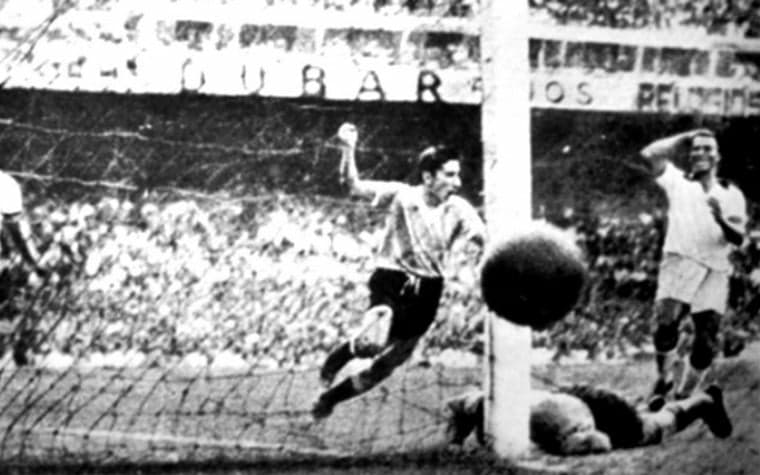
For a crowd of over 173,000 people, the then-new Maracanã stadium, built specifically for the World Cup, had a feeling that Brazil had already won, playing at home and needing only a draw. However, what happened was the most painful defeat in Brazilian football up to that point.
Brazil even managed to open the scoring, but with two Uruguayan goals in the latter part of the second half, the rivals silenced the stadium, making the defeat known as “Maracanazo,” surprising everyone present at that match.