Amazing Betting Tips: How Online Gambling Regulations Differ Across African Countries
Learn how online gambling laws differ across African countries, including licensing, age restrictions, responsible gambling rules, advertising standards, and consumer protections.
Online gambling has grown widely across Africa today. Both Mobile internet, digital payment systems, and the popularity of sports have made online betting and casino platforms more accessible than ever. However, one thing that surprises many netizens and sports lovers is that bet predictions or gambling regulations differ across African countries in significant ways.
In this page, we will share with your the best you needs to know about How Online Gambling Regulations Differ Across African Countries today. We remain the best free Football predictions site you can find on internet today, tomorrow and we offer both online free tips, and VIP tickets depending on the service you want..
Many African countries have built licensing systems and strict consumer protection laws, while others have partial regulations or outright restrictions. If you're researching the gambling industry, studying gaming law, or simply curious about how different African governments regulate the sector, this guide explains the key differences.
How African Gambling Laws Compare
| Area | Varies Across Africa? |
|---|---|
| Licensing | Yes |
| Minimum age | Yes (mostly 18+) |
| Responsible gambling rules | Yes |
| Advertising restrictions | Yes |
| Consumer protection | Yes |
| Online casino legality | Depends on the country |
The biggest takeaway is that there is no single African gambling law. Every country operates its own regulatory framework.
Why Regulations is Important
Governments regulate gambling for several reasons:
- Protect minors from gambling.
- Prevent money laundering and fraud.
- Ensure operators pay taxes.
- Promote responsible gambling.
- Protect customer funds and personal data.
A licensed operator is generally required to follow national laws regarding fairness, identity verification, and responsible gaming measures.
Licensing Systems Across African Countries
Licensing is the foundation of gambling regulation. A company cannot legally operate in many jurisdictions without approval from the country's gaming authority.
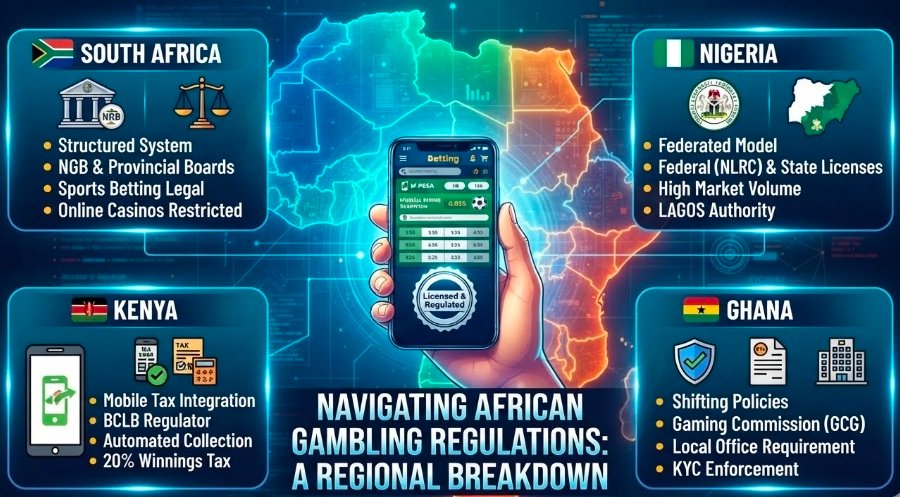
South Africa
South Africa has one of Africa's most structured gambling regulatory systems.
Key features include:
- Provincial licensing authorities
- Strict compliance requirements
- Identity verification
- Financial reporting obligations
Sports betting is widely regulated, although certain forms of online casino gambling remain legally restricted depending on interpretation of national law.
Nigeria
Nigeria regulates gambling through both federal and state-level frameworks.
Important characteristics include:
- Multiple licensing structures
- Tax obligations for operators
- Consumer complaint procedures
- Age verification requirements
Because regulation can differ between states, operators must comply with the appropriate licensing authority where they offer services.
Kenya
Kenya has tightened gambling regulations in recent years.
Authorities focus heavily on:
- Licensing renewal
- Tax compliance
- Advertising controls
- Protection of young people
The government has periodically reviewed operator licenses to improve industry standards.
Ghana
Ghana maintains a national licensing framework for online betting operators.
Licensed companies must generally comply with:
- Responsible gambling policies
- Customer verification
- Fair gaming practices
- Regulatory reporting
Countries with Limited Online Regulation
Some African nations still have developing legal frameworks. In these markets:
- Online gambling may exist in a legal gray area.
- Licensing procedures may be limited.
- Enforcement varies.
- Consumer protections are often weaker.
Anyone researching these markets should always check the latest national legislation before relying on outdated information.
Age Restrictions Across Africa
One of the most consistent rules is the minimum gambling age, although the exact age varies by country.
| Country | Typical Minimum Age |
|---|---|
| South Africa | 18 |
| Nigeria | 18 |
| Kenya | 18 |
| Ghana | 18 |
| Some jurisdictions | 21 or different rules |
Age verification has become much stricter because operators increasingly use digital identity checks before allowing withdrawals or full account access.
Why Age Verification Is Important
Modern gambling regulators require operators to verify customer identity using documents such as:
- National ID
- Passport
- Driver's license (where accepted)
This helps prevent underage gambling and financial crime.
Responsible Gambling Rules
Responsible gambling has become one of the fastest-growing regulatory priorities across Africa.
Many licensed operators are required to provide tools that help users control their gambling behavior.
Common requirements include:
- Deposit limits
- Spending reminders
- Self-exclusion programs
- Reality checks
- Account cooling-off periods
These features are designed to reduce gambling-related harm rather than encourage more betting activity.
Self-Exclusion Explained
Self-exclusion allows an adult customer to voluntarily block access to their gambling account for a fixed period.
Depending on local regulations, exclusions may last:
- 24 hours
- 7 days
- Several months
- Multiple years
In stronger regulatory systems, operators are prohibited from sending promotional messages during the exclusion period.
Advertising Standards in Different Countries
Advertising rules vary dramatically across Africa.
Some countries permit gambling advertising with restrictions, while others heavily limit television, radio, or social media promotions.
Common Advertising Rules
Licensed operators may be prohibited from:
- Targeting minors
- Using misleading winning claims
- Suggesting gambling guarantees income
- Featuring child-oriented content
- Promoting irresponsible gambling behavior
Many regulators also require responsible gambling messages within advertisements.
Digital Marketing Restrictions
Increasingly, regulators are examining:
- Influencer promotions
- Social media campaigns
- SMS marketing
- Push notifications
Several jurisdictions require clear age warnings and prohibit deceptive promotional messaging.
Consumer Protection Measures
Consumer protection is what separates regulated markets from unregulated ones.
A licensed gambling operator is typically expected to provide:
- Secure payment processing
- Transparent terms and conditions
- Complaint procedures
- Fair dispute resolution
- Protection of customer data
Without regulation, players often have fewer legal options if disputes arise.
What Happens When a Dispute Occurs?
In regulated jurisdictions, consumers can usually report complaints involving:
- Unpaid winnings
- Account suspension
- Bonus disputes
- Technical game errors
- Identity verification delays
The relevant gaming regulator may investigate if the operator is licensed within that country.
Taxation and Operator Responsibilities
Regulation isn't only about players—it also affects gambling companies.
Licensed operators commonly pay:
- Corporate taxes
- Gaming duties
- Licensing fees
- Regulatory compliance costs
These taxes often contribute to government revenue and public programs, although the structure differs widely between countries.
Emerging Trends in African Gambling Regulation
The regulatory landscape continues to evolve throughout 2026.
Several trends include:
Stronger Identity Verification
More regulators now require robust Know Your Customer (KYC) procedures before withdrawals.
Responsible Gambling Technology
Operators increasingly use AI tools to identify potentially harmful gambling patterns and offer intervention options.
Cross-Border Challenges
International gambling websites create regulatory challenges because a platform licensed in one jurisdiction may still face restrictions in another.
Data Protection
Privacy laws are becoming more important, with operators expected to safeguard customer information alongside financial security.
Frequently Asked Questions
Is online gambling legal everywhere in Africa?
No. Laws differ significantly between countries, and legality depends on national legislation.
What is the most common minimum gambling age?
Most regulated African jurisdictions use 18 years as the minimum age, although some exceptions exist.
Why do countries require licensing?
Licensing helps ensure operators meet standards for fairness, taxation, responsible gambling, and consumer protection.
Can advertising rules differ between countries?
Yes. Some countries allow broader gambling advertising, while others impose strict limitations on television, radio, and digital platforms.
Conclusion
Understanding how online gambling regulations differ across African countries is essential for anyone studying gaming law or the regulated gambling industry. While South Africa, Nigeria, Kenya, and Ghana have more developed licensing frameworks, regulatory approaches continue to evolve across the continent. The key differences lie in licensing systems, age restrictions, responsible gambling requirements, advertising standards, and consumer protection measures.
Disclaimer: This article is for educational and informational purposes only. Gambling laws vary by jurisdiction and may change over time. Always consult your country's official gaming regulator for the latest legal requirements.